Van Gogh Went Free-to-Play: Now You Can Walk Inside His Paintings
Van Gogh just went free-to-play, and suddenly his paintings aren’t hanging on a wall. They’re levels you can walk through. In Dear Van Gogh, an interactive experience inside the game Sky: Children of the Light, players step into a reimagined version of his world, moving through episodes shaped by his letters, relationships and the emotional weight of his work.
When a masterpiece becomes a map
The hook is simple and almost surreal. Instead of standing in front of Starry Night or The Potato Eaters, you cross into spaces that borrow their mood and palette, then ask you to move, listen, and feel. Dear Van Gogh unfolds as a six-part journey of gratitude, where each chapter echoes a phase of the artist’s life, from early uncertainty to the intense final period in Auvers-sur-Oise. What you explore is not a literal 3D scan of each canvas. It is a narrative space built around his inner world, his friendships, and the acts of care that held him up while he painted.
There is a reason this feels so current. Culture is shifting from static consumption to interactive participation. Stories are no longer only watched. They are played. For a generation raised on games, streaming and shared digital experiences, the idea of visiting Van Gogh for the first time inside a free game is not a gimmick. It’s an intuitive entry point.
Turning museums into reachable worlds
For decades, museums tried to be more accessible by adding audio guides, labels in multiple languages, and educational rooms. Now they are experimenting with something more radical. They are turning their collections into experiences that can travel to people instead of waiting for people to travel to them. The Van Gogh Museum, for instance, allows audiences to tour its spaces in high-resolution video, browse hundreds of works and letters online, and wander through the museum free from fellow visitors from their own screens.
Free or low-barrier digital projects stretch that logic even further. They recognise that access is not just about ticket prices. It is also about confidence, habit, and cultural codes. Someone who feels out of place in a museum might feel completely at home in an interactive space that uses familiar mechanics, movement, discovery, co-op play, to introduce them to art. In that sense, Van Gogh becoming a video game is less about turning art into entertainment, and more about turning art into something you can enter without needing to know how to behave in front of a masterpiece.
Emotion as gameplay
One of the most striking choices in Dear Van Gogh is the decision to frame the whole experience as a love letter to the support system around the painter. The developers focus on the people who encouraged him, believed in him, and made it possible for his work to exist, family, friends, and advocates, rather than reinforcing the lone-genius myth. You move through spaces designed to mirror his moods: bright, hopeful sequences that recall his Paris period, heavier, more contemplative passages tied to his last months, and quiet moments that feel like visual responses to his letters rather than direct adaptations of any single work.
That choice has a bigger implication. By centering emotion and relationships, the game is telling players that art is a human ecosystem, not just a room full of objects. It invites them to see Van Gogh not as a distant icon but as someone whose struggles and joys can still be felt, even inside a digital landscape.
Free-to-play, not free of meaning
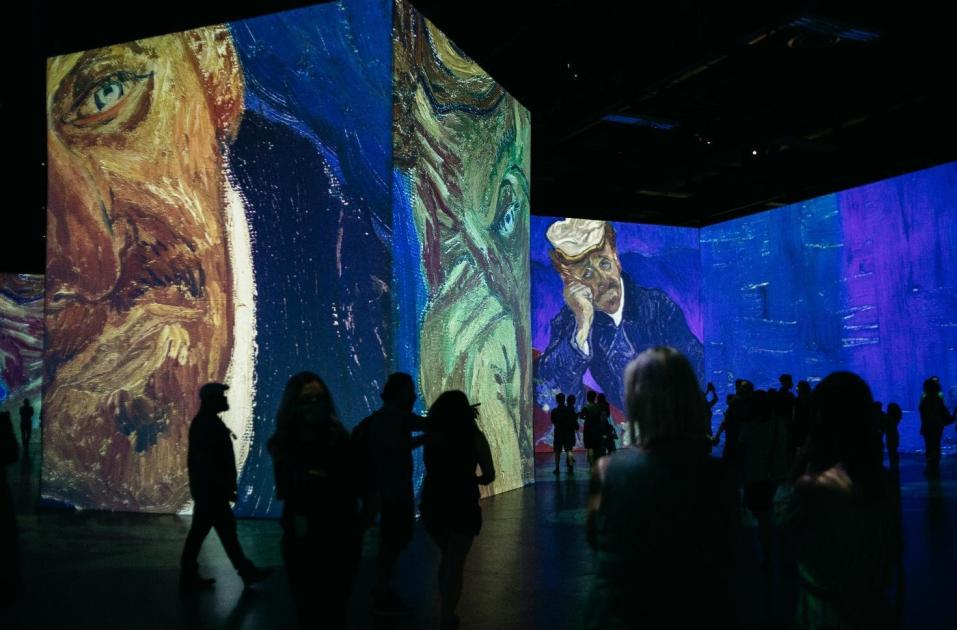
The fact that this journey is available for free matters. It lowers the barrier for anyone curious enough to try, and it fits into a broader movement to democratise cultural experiences, especially for younger audiences who might not have the means or inclination to plan a museum visit. From VR-based exhibitions to 360-degree immersive shows, institutions and creators are experimenting with ways to meet people where they already are: in games, apps and online spaces. Projects like Van Gogh: The Immersive Experience or Van Gogh: Life Beyond Colors in VR invite visitors to enter the universe of the Dutch genius through projection and virtual reality, in parallel to traditional galleries.
There is a tension here, and it is healthy. If a masterpiece becomes a level, what happens to the aura of the original canvas? Game designers and museum curators increasingly argue that digital experiences should be bridges, not replacements. Ways to spark curiosity, offer emotional contact, and encourage people to seek out the paintings themselves when and if they can.
The future of visiting Van Gogh
It is tempting to see this trend as a novelty wave that will pass. But look at the broader picture. Museums stream concerts, host digital archives, collaborate on apps, and work with immersive platforms not as side projects, but as active extensions of their mission. In that context, Dear Van Gogh feels less like an exception and more like a laboratory: an experiment in how a 19th-century artist can live inside 21st-century culture without losing the emotional charge that made his work stand out in the first place.
The real shift is in the verb. We used to ask, “Have you seen Van Gogh?” As games, VR, and digital exhibitions grow, the question quietly changes. “Have you been inside his world?” And for more and more people, that first step into the world may happen through a controller or a phone screen, before they ever find themselves in front of a canvas.